
Excipient Screening for Pharmaceutical Delivery
Administration of pharmaceutical chemicals requires an appropriate excipient to achieve in vivo delivery. High-throughput screenings for active compounds are consequently hindered by physicochemical characterization bottlenecking formulation. COSMO-RS provides a fast pre-screening tool to aid in formulation discovery by finding high-solubility excipient candidates. This procedure will be illustrated for danazol, a common steroid.
Create a New Compound
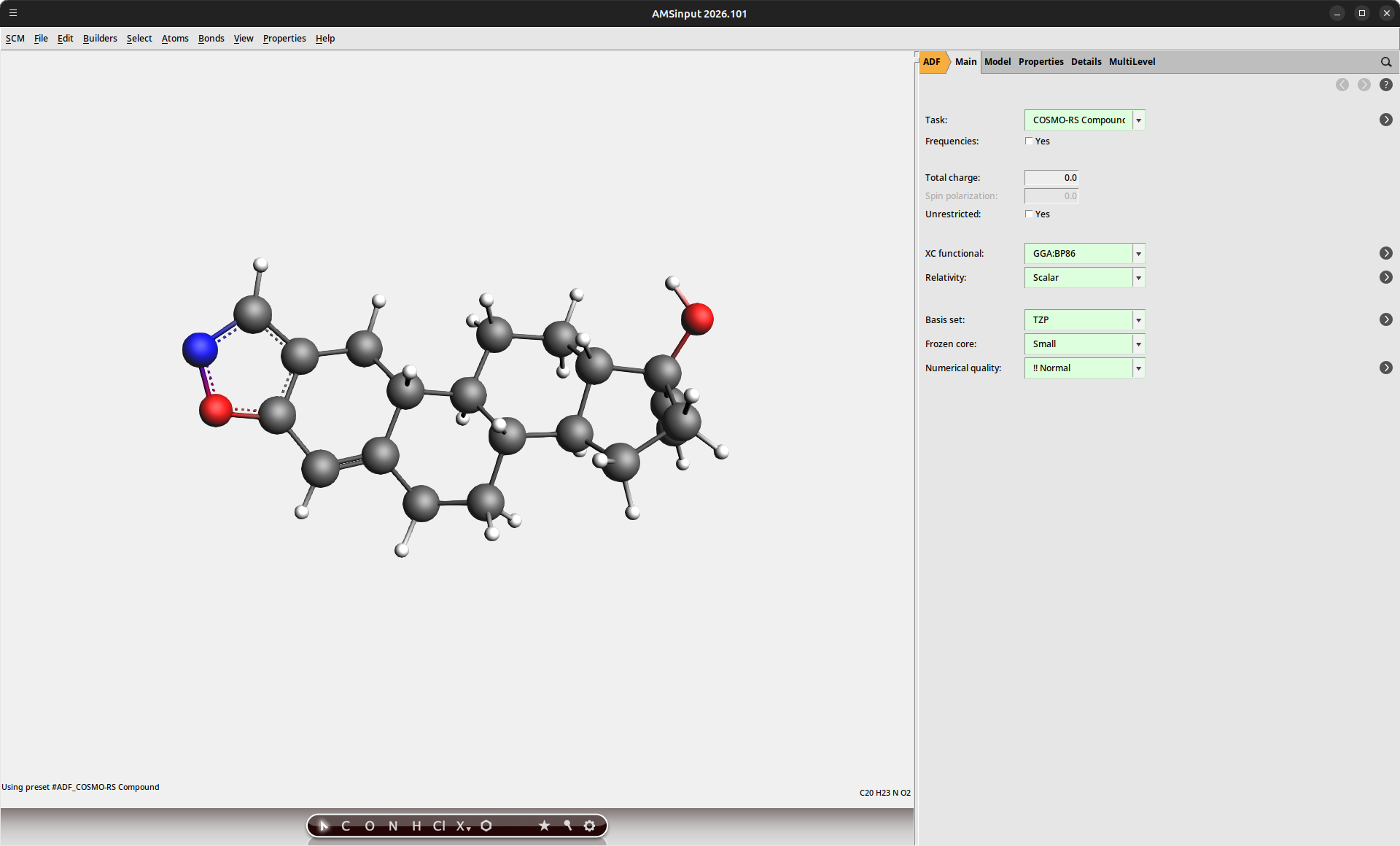
As a first step, we will calculate the electrostatic profile of danazol. This will provide the required parameters for the COSMO-RS calculation.
C#C[C@]1(O)CC[C@@H]2[C@@H]1CC[C@H]1[C@H]2CCC2=Cc3c(C[C@H]12)cno3 and select OKDanazolThe COSMO-RS compound task will perform a geometry optimization of the molecule. A COSKF file will then be produced for the optimized geometry, which contains the required COSMO-RS parameters.
Screening Excipients
Once the danazol calculation has finished, we can add the new compound to our COSMO-RS workspace.
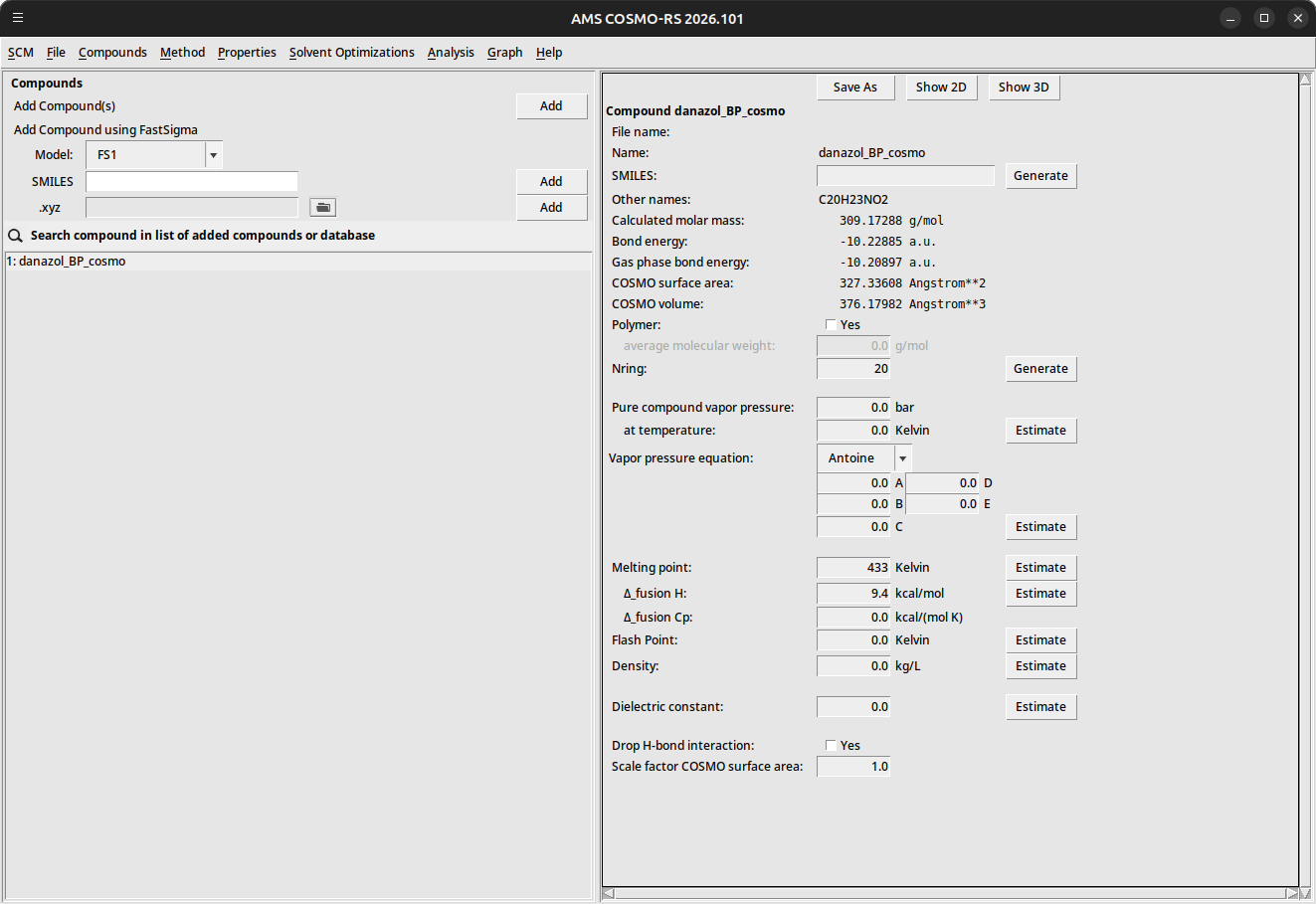
Danazol.coskf file that was created in the previous stepDanazol compound from the list and click the Generate button to automatically set the Nring parameterIn order to calculate the solubility of a solid compound inside a liquid, COSMO-RS requires the melting point and enthalpy of fusion to be known. You can use the Estimate buttons to generate values through machine learning. However, for accurate calculations, it is recommended to use experimental values, as was done here.
For the excipients, we will use compounds from the included CRS database. A selection of commonly-used solvents will be considered here.
N-Methyl-2-pyrrolidone in the search bar. Select the compound from the list and click the OK button to add it to the workspace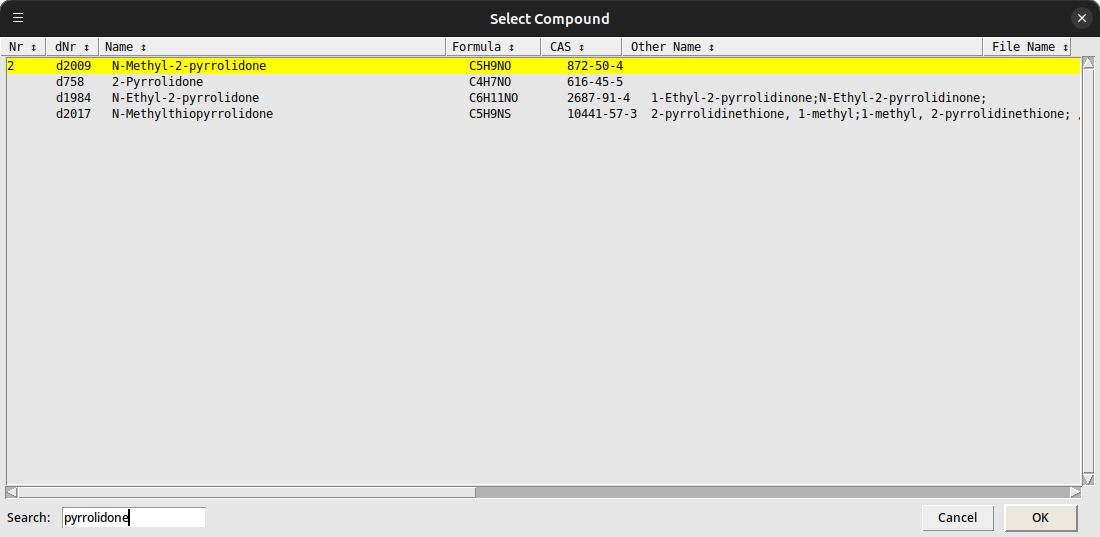
Once the excipients have been loaded in, we can now perform a solubility screening:
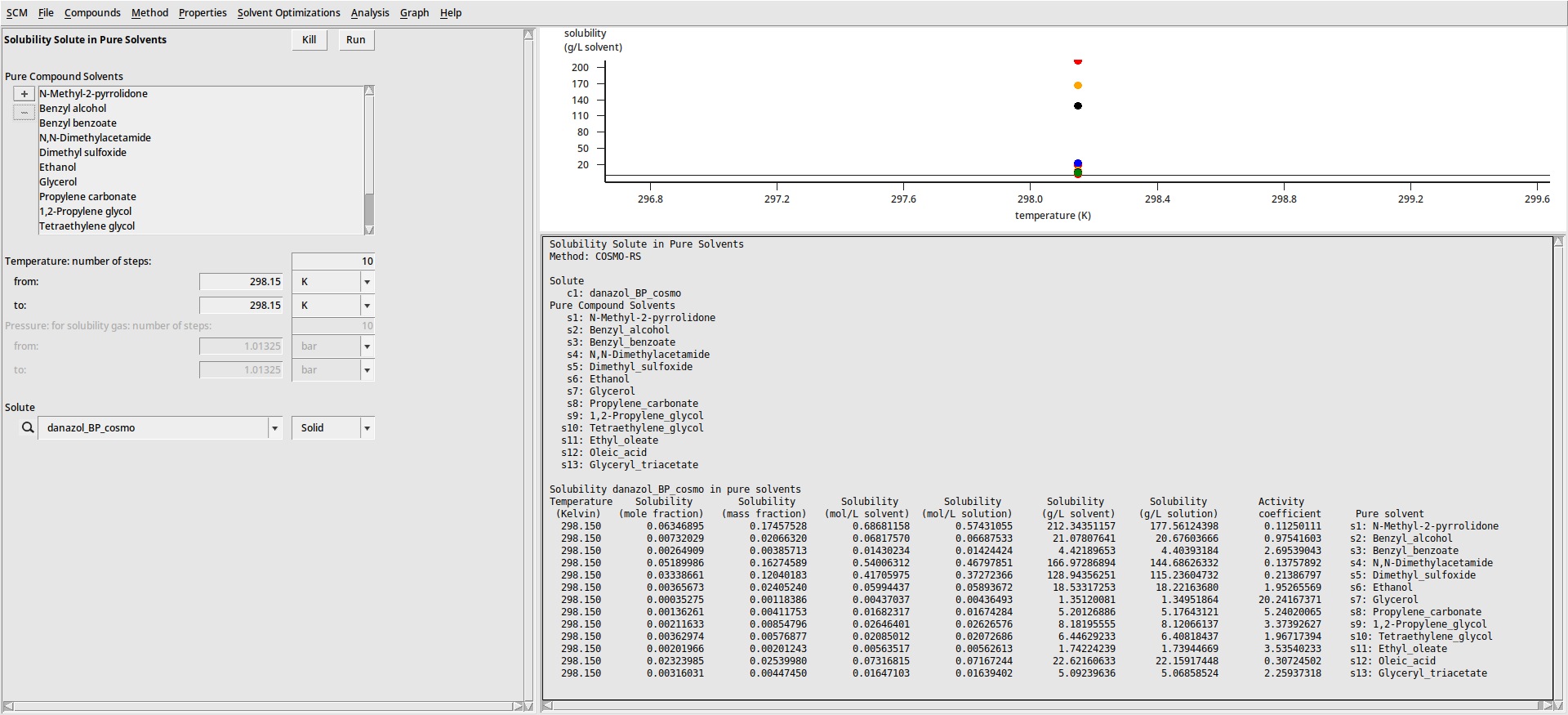
 to bring up the list of compounds. Select each of the excipients and click Add. (You can use CTRL+LMB or CTRL+SHIFT+LMB to select multiple excipients at once.)
Danazol compound. Make sure the phase is set to SolidBoth a graph and table containing the calculated solubility data will be generated.
Results
The figure below shows a comparison with experimental solubilities. We see that:
COSMO-RS reproduces the general trend in solubility, though predictions for individual excipients can be off.
There is a tendency to underestimate the solubility. (There are many possible reasons for this, either in the choice of COSMO-RS parameters, DFT settings or the reference state of the compound.)
We were able to correctly classify high-solubility excipients, regardless of the individual sample errors. Detailed quantitative comparisons (seen in the medium-solubility regime) are more difficult.
These results highlight the potential of COSMO-RS as a fast pre-screening tool to enable classification of large excipient databases for finding high-solubility candidates. COSMO-RS can evaluate several hundreds of excipients per second, making it a valuable tool to help guide experimental validation and improve resource usage.
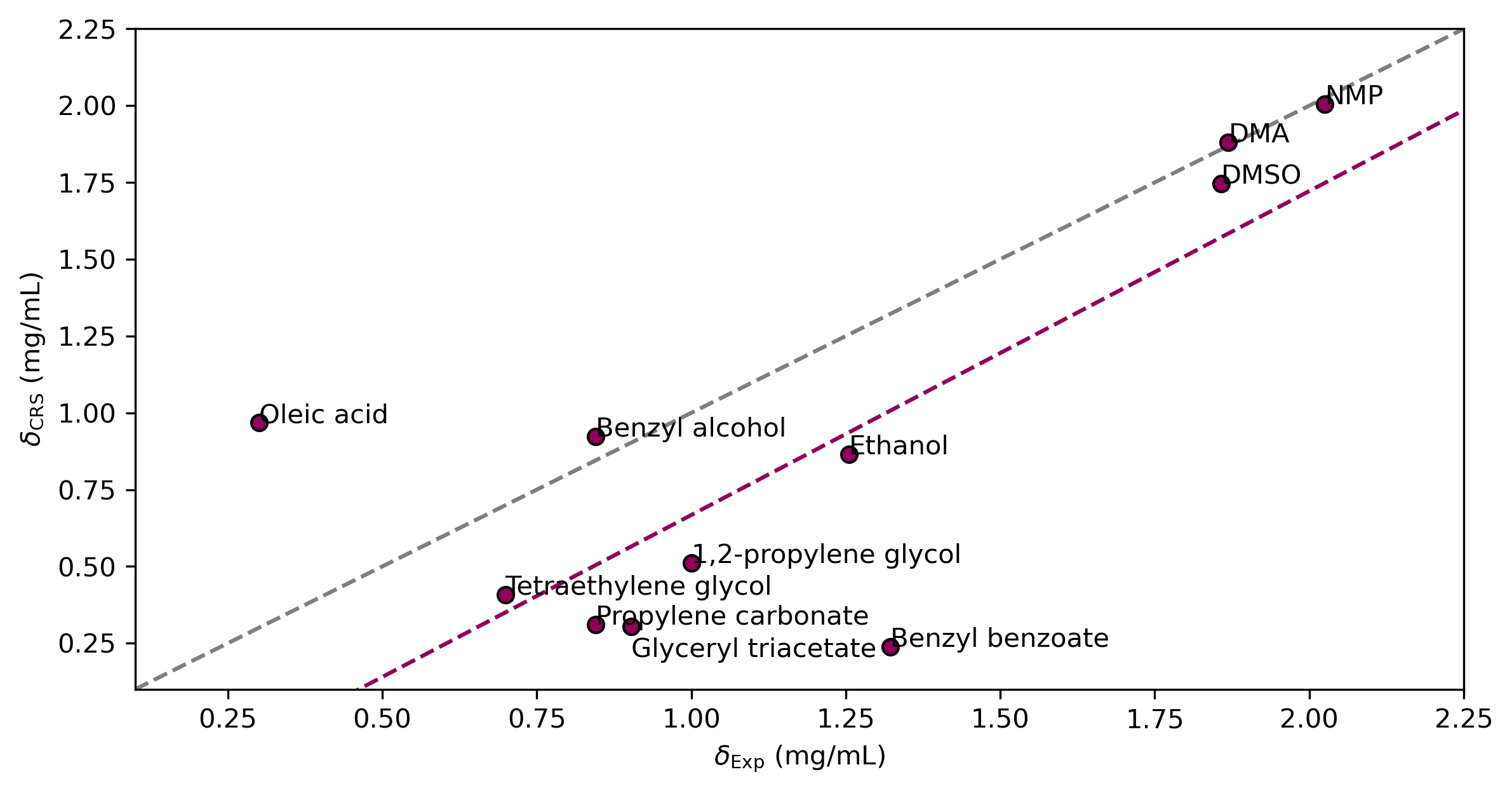
Fig. 76 Comparison between experimental solubilities[1] and predicted values obtained from COSMO-RS at 298.15 K