Exciton Simulation
Opto-electronic processes are defined in the kMC simulation to model OLED emission. In this example, a phosphorescent emitter is considered. Loss processes are included using both Dexter and Förster mechanisms.
Open BBinput and set the project name to Exciton Simulation.
Note
You can download the project file
Create Materials
To construct the OLED device stack, we will create an electron transport layer, a hole transport layer and a host-guest emitter. This requires the definition of 4 materials.
Tip
If you have never created materials before, take a look at the start of the bulk tutorial.
Phosphorescent Dye
Ir(ppy)3 is used as the phosphorescent dye. We will select the corresponding template when creating a new material on the Materials page.
On the Electronic tab, we specify a HOMO level of -5.27 eV and a LUMO level of -1.86 eV. A Gaussian broadening is enabled by default.
Several material-specific parameters are specified to describe exciton generation and emission. These parameters are set on the Excitonic tab of the material editor.
We will set a singlet binding energy of 0.75 eV and a triplet binding energy of 1 eV. By enabling the option to link the singlet and triplet binding energies, the exciton energy levels will be computed automatically based on the exciton binding energy and the HOMO/LUMO levels.
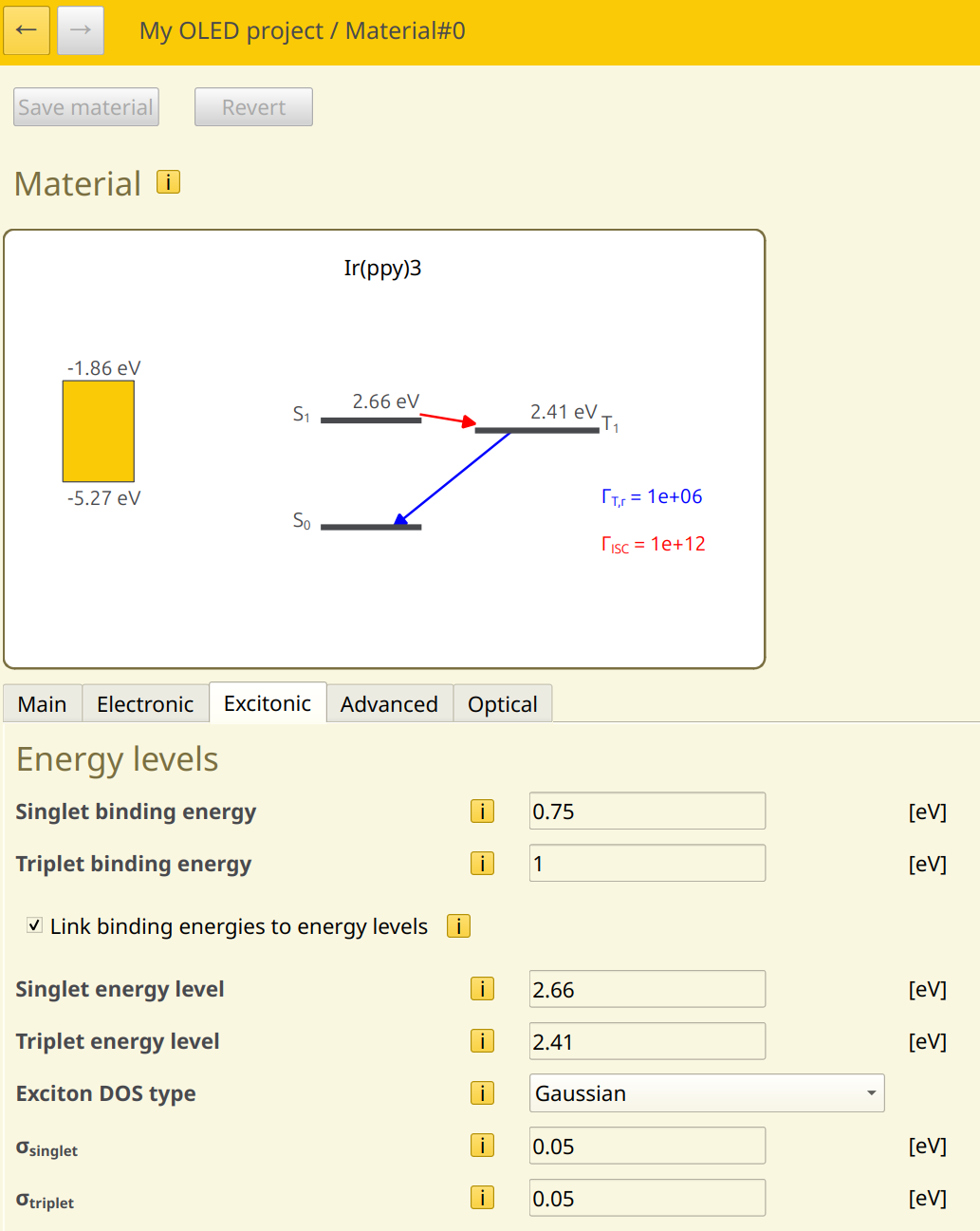
Fig. 41 Exciton binding energies and energy levels can be linked automatically
An energy level broadening is defined for the exciton levels, just as we did for the polaron levels, accounting for the variations in molecular parameters due to the inhomogeneous environment of the layer. A Gaussian broadening is used, this time with a width of 0.05 eV.
To describe Dexter-type exciton diffusion, Dexter transfer parameters are specified. We choose a prefactor of 1, with a decay length of 0.3 nm.

Fig. 42 Rate constants for Dexter-type exciton transfer
Note
The rates of transfer processes is specified in normalized units. I.e. the true prefactor is multiplied by a normalization factor. This time unit is specified in the parameter set.
This decomposition allows us to write the material parameters using convenient factors.
In contrast, the radiative processes are provided in natural units, without normalization. These parameters specify the real frequency in the input, with normalization applied internally by Bumblebee.
By selecting the phosphorescent material template, the singlet fractions will have been set to 0, such that the exciton generation products will exclusively be triplets.
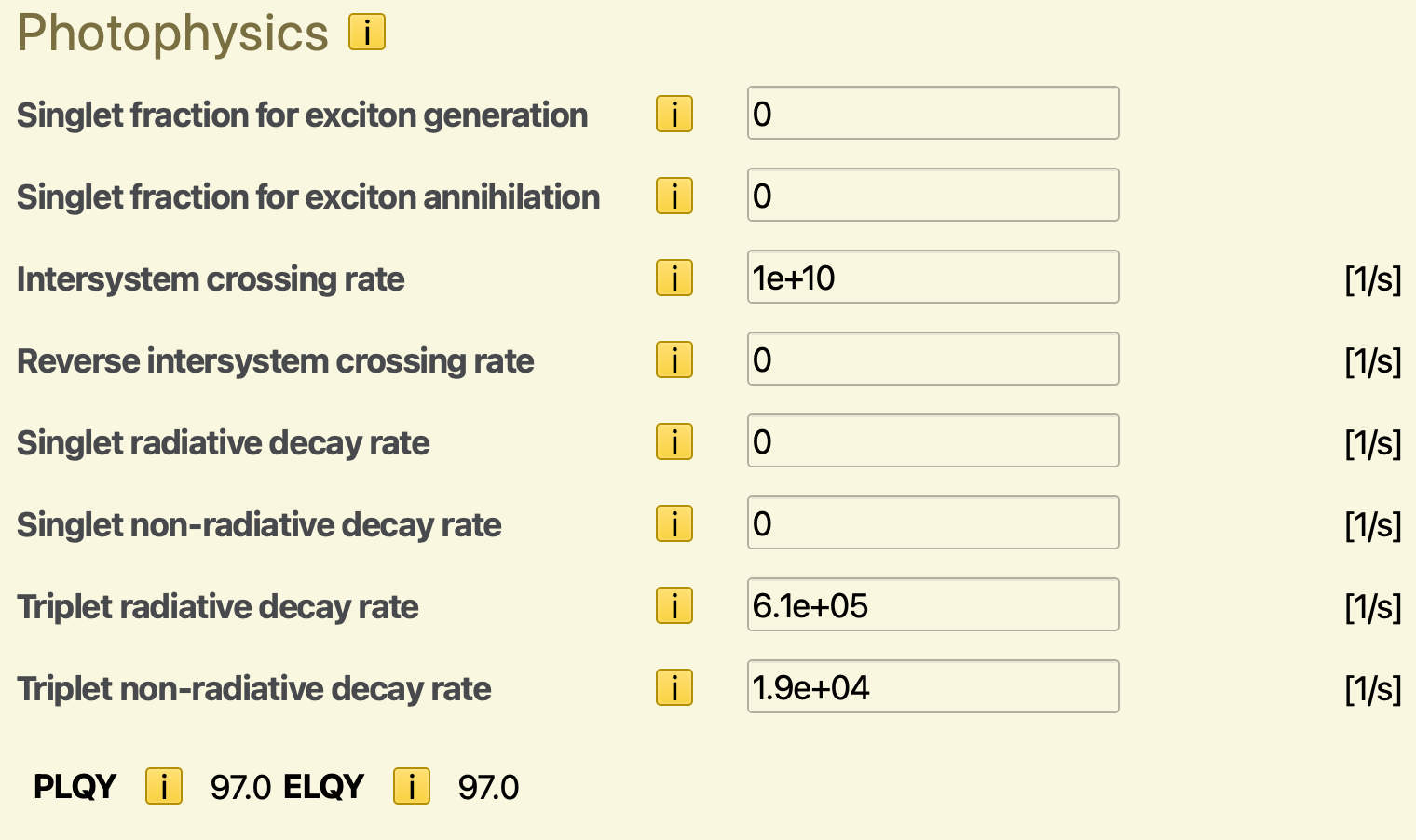
Fig. 43 Förster prefactors, intersystem crossing frequencies and singlet-triplet distributions. The PLQY and ELQY are reported automatically based on the provided rates
An intersystem crossing rate of \(10^{10}\,\textrm{s}^{-1}\) will be specified. The reverse intersystem crossing rate is set to 0. This allows any singlets obtained through e.g. exciton transport to be irreversibly converted to triplets.
The radiative decay rate of the triplet excitons is set to \(6.1\cdot{}10^{5}\,\textrm{s}^{-1}\). The non-radiative decay rate is set to \(1.9\cdot{}10^{4}\,\textrm{s}^{-1}\). The photoluminescent and electroluminescent quantum yields of the dye are now reported to provide an indication of the molecular emitter efficiency.
Note
Förster processes will be configured in the stack editor. Because Förster transfer describes a dipolar process, the rate parameters exhibit strong variations with molecular environment. The stack editor allows definition of custom rates for inter-layer transfer processes, and allows definition of multiple intra-layer Förster processes to account for more complex rate expressions.
Host
CBP is used as a host material. Select the appropriate template when creating a new material entry.
We use a HOMO level of -6.08 eV and a LUMO level of -1.75 eV. A Gaussian broadening is enabled by default. For the excitons, we use a singlet binding energy of 1 eV and a triplet binding energy of 1.7 eV. For Dexter-type exciton transfer, a prefactor of 0.95 is used along with a decay length of 0.3.
The singlet-triplet generation ratio will be set to 0.25 (corresponding to a statistical 1:3 distribution of singlet and triplet excitons).
Thermalization losses during exciton transport from the dye through the host are included by setting the non-radiative decay rates to \(10^{5}\,\textrm{s}^{-1}\) for singlets and \(10^{4}\,\textrm{s}^{-1}\) for triplets. The radiative decay rates are set to 0.
Electron Transport Layer
TPBi is used as an electron transport layer. Select the Transport layer when creating a new material.
We use a HOMO level of -6.2 eV and a LUMO level of -1.7 eV. For the excitons, we use a singlet binding energy of 0.75 eV and a triplet binding energy of 1 eV. For Dexter-type exciton transfer, a prefactor of 1 is used along with a decay length of 0.3.
To mimic the effect of an exciton diffusion barrier in the stack, a non-radiative decay rate of \(10^{8}\,\textrm{s}^{-1}\) is specified for both excitons.
Hole Transport Layer
TAPC is used as the hole transport layer. We use a HOMO level of -5.5 eV and a LUMO level of -0.96 eV. For the excitons, we use a singlet binding energy of 1 eV and a triplet binding energy of 1.59 eV. For Dexter-type exciton transfer, a prefactor of 1 is used along with a decay length of 0.3. A non-radiative decay rate of \(10^{8}\,\textrm{s}^{-1}\) is specified for both excitons.
Create Compositions
We will create a host-guest mixture containing 0.9 CBP and 0.1 Ir(ppy)3.
Create a Stack
We start by composing the stack layers. We use a 20 nm TAPC hole transport layer, a 30 nm host-guest layer in the center and a 20 nm TPBi electron transport layer.

The stack editor now allows us to define the Förster radii. Förster rates are defined for various processes, including diffusion, quenching and annihilation. Because the Förster rates depend on the molecular environment, separate reactions have to be specified for each pair of materials. To streamline this process, the GUI provides the option to automatically configure the most common processes for the current stack. The mechanisms that are included are based on the material templates.
Enable the Auto Förster option. This will include the triplet diffusion, triplet quenching and exciton annihilation reactions.
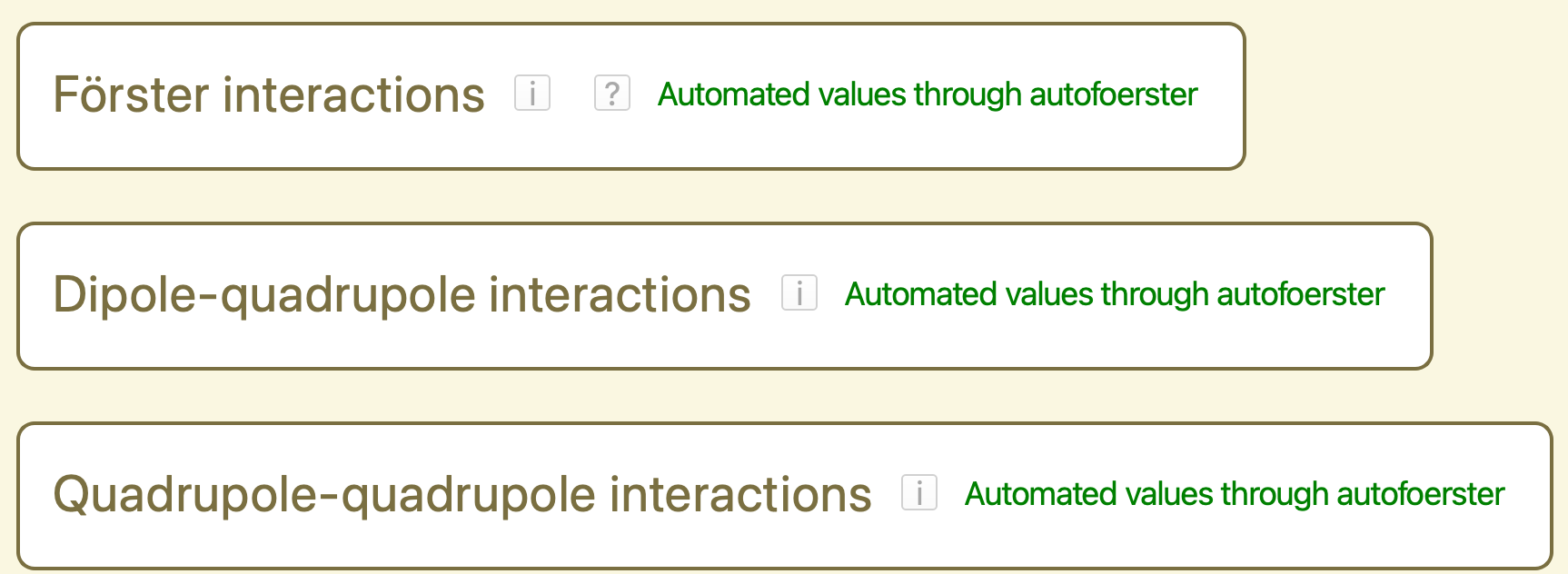
Fig. 44 When using Auto Förster, the corresponding tables (at the bottom of the page) are disabled.
Create a Parameter Set
Press the New from preset button and select single voltage point. Set a default voltage of 5 V (Device voltage in the main tab). Set in the Termination tab the maximum number of simulation steps to 1.000.000.000.
Excitonic processes are included in the simulation by enabling the exciton module. The single voltage point template includes this option by default. You can check the module configuration by navigating to the Modules tab.
Starting the Simulation
A voltage sweep can be performed to investigate the roll-off in device efficiency at higher voltages. We select a voltage range from 3 to 6 V and select 7 voltage points. A single disorder instance can be selected to decrease the simulation runtime.
If you wish to limit the computational time required for this tutorial, you can perform the single voltage point simulation instead. This will use the 5 V default chosen in the parameter set.
Simulation Output
The distribution of carriers over the stack layers can be viewed in the Profiles section of the Sweep Report panel.
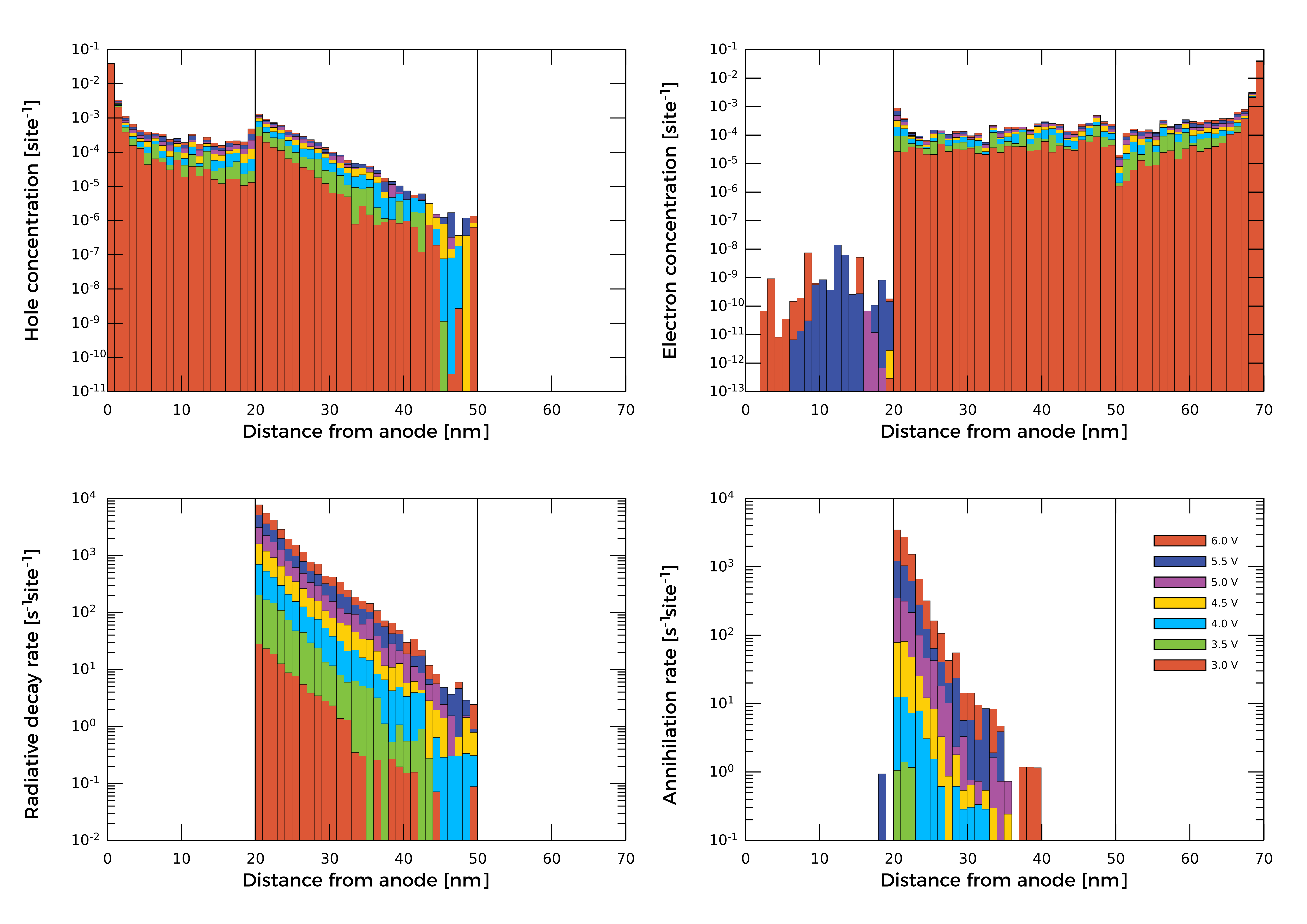
Fig. 45 Voltage-dependent carrier densities in the OLED stack
A summary of the excitonic process frequencies is provided in the OLED Report section, along with the current-voltage characteristics and device efficiency.
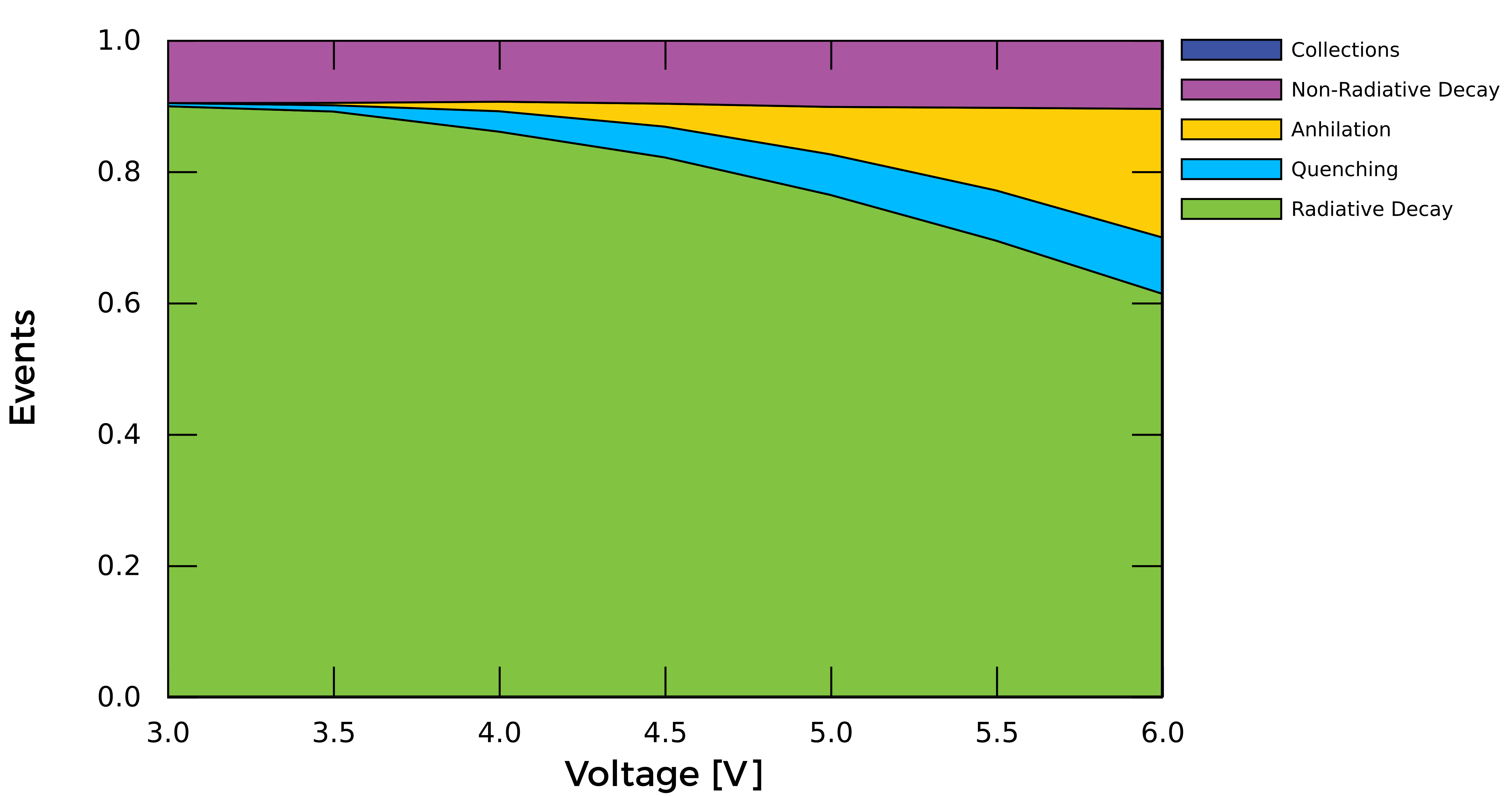
Fig. 46 OLED efficiency roll-off following voltage-dependence of device loss processes