
Thermomorphic Solvents for Homogeneous Catalyst Recovery
A key challenge in the industrialization of homogeneous catalytic processes lies in the recovery of precious catalyst from the product mixture. Thermomorphic solvents provide one possible avenue towards facile separation of the product stream. By changing the temperature, phase separation of the solvent can be induced downstream from the reactor vessel. Preferential dissolution of the catalyst into 1 of the component phases then facilitates physical separation and recycle.
Tailoring a thermomorphic blend is quite challenging as the solvents need to achieve good separation performance while also keeping the phase transition point within a practical operating window. In this tutorial, we will illustrate how digital pre-screening with COSMO-RS can resolve constrained solvent design problems, focusing on alkene hydroformylation.
Modeling the Catalyst
In this tutorial, we will investigate the optimization of a thermomorphic solvent for Rh-catalyzed hydroformylation of 1-dodecene.[1] This process has been a prominent industrial example of thermomorphic solvent application. For our solvent screening, we will primarily use commonly-available solvents, which are included in the CRS database. The catalyst, a RhBiPhePhos complex, will need to be evaluated separately.
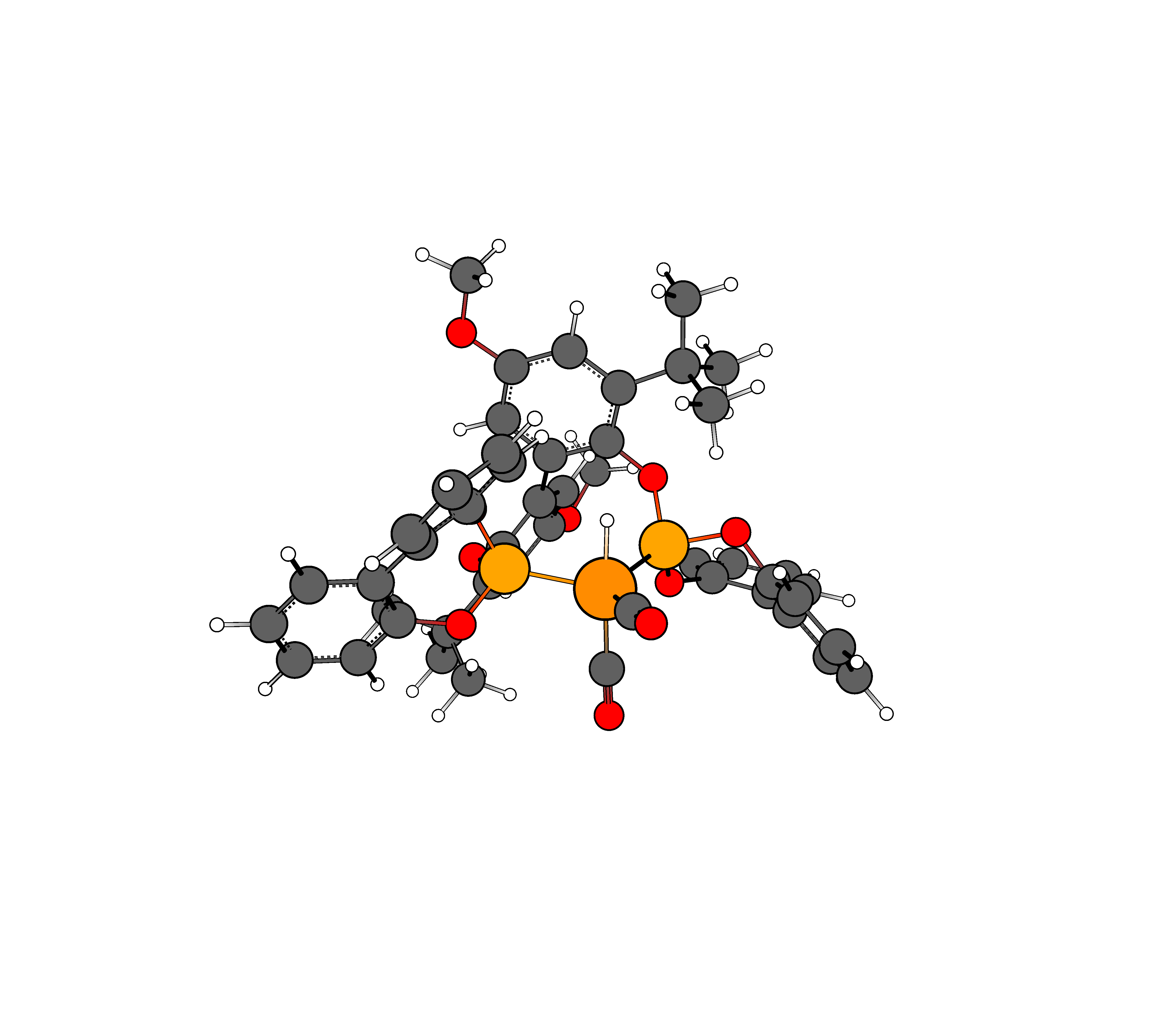
A COSMO-RS parameter file for RhBiPhePhos can be generated using ADF. This will provide the electrostatic profile for evaluating the solvent interactions.
 button and choose Rh in the periodic table menu. Click in the drawing area to add the central Rh atom.
 → Ligands → Bidentates → BiPhePhos. Click on the Rh atom to add the BiPhePhos ligand. → Ligands → CO and click in the drawing area to place a CO ligand in the axial position, opposite of the BiPhePhos ligand. → Ligands → CO and click in the drawing area to place a CO ligand in the equatorial position.
 tool and click in the drawing area to place a H ligand in the remaining axial position.
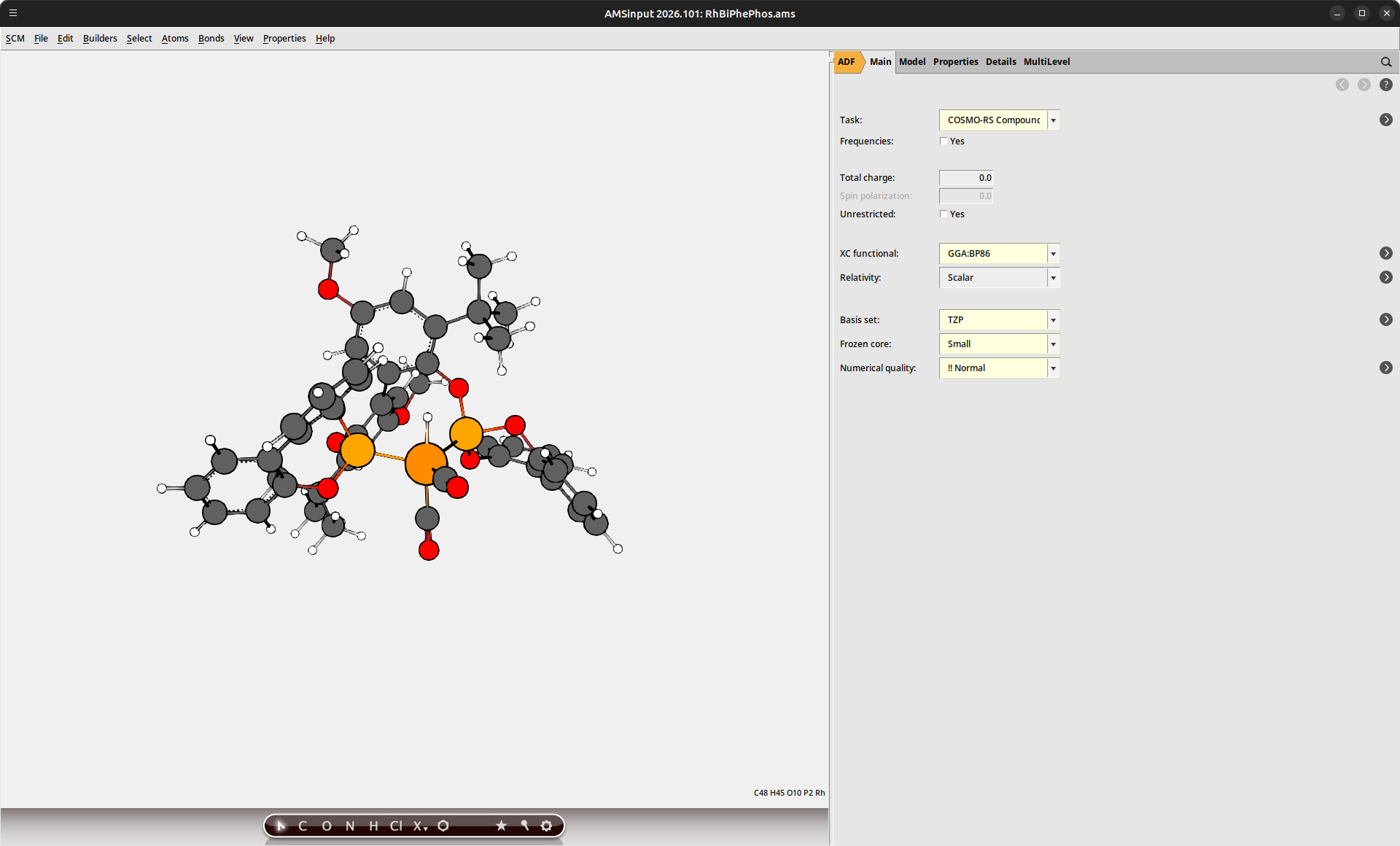
RhBiPhePhosThe COSMO-RS compound task will perform a geometry optimization of the molecule. A COSKF file will then be produced for the optimized geometry, which contains the required COSMO-RS parameters.
Solvent Screening
The benchmark thermomorphic solvent system for the hydroformylation process is the DMF/dodecane system.[1] A polar solvent is used to separate the catalyst, while the hydrocarbon product is captured by the non-polar solvent. Simultaneous optimization of catalyst and product recovery from the process stream has to be achieved.
We will perform a digital screening of new solvent mixtures in order to find candidate thermomorphs that can improve the separation process. We will consider a series of polar solvents for the catalyst recover, and a series of non-polar solvents for the product recovery. When selecting our candidate solvents, we preemptively exclude any materials that are unsuitable for the commercial process, based on factors such as toxicity, corrosiveness or regulatory restrictions.
To set up the screening, we first add the RhBiPhePhos catalyst structure to our COSMO-RS workspace.
RhBiPhePhos.coskf file that was created in the previous stepRhBiPhePhos compound from the list and use the Generate button to automatically set the Nring parameterThe reaction product, tridecanal, can then be added from the database.
Tridecanal in the search bar. Select the compound from the list and click the OK button to add it to the workspace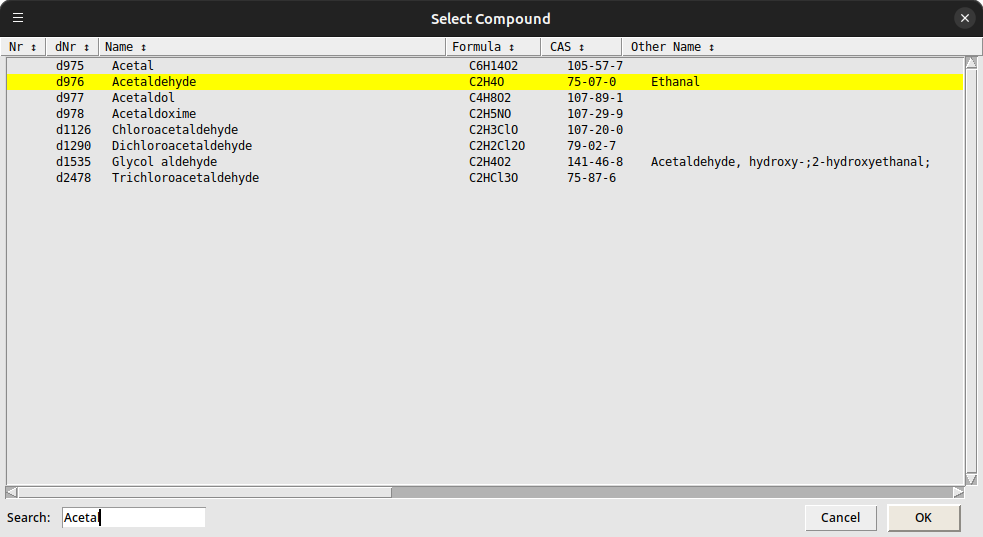
We can also use the database to load a series of solvents. These will be used to generate candidate thermomorph blends:
Polar solvents for catalyst recovery: acetaldehyde, N,N-dimethylformamide (DMF), acetone, N,N-dimethylacetamide (DMA), N-methyl-2-pyrrolidone (MPD), methyl acetate and N,N-diethylformamide (DEF)
Non-polar solvents for tridecanal recovery: tetradecane, tridecane, dodecane, undecane, decane, nonane, octane, heptane, hexane, cyclohexane, bicyclohexyl, 2-methyltridecane, 2-methyldodecane, 2-methylundecane, 2-methyldecane, 2-methylnonane, 2-methyloctane, 2-methylheptane, 2-methylhexane, methylcyclohexane, ethylcyclohexane, propylcyclohexane, butylcyclohexane, pentylcyclohexane, cyclopentane, methylcyclopentane, ethylcyclopentane, propylcyclopentane, butylcyclopentane
The general screening procedure will be outlined next. We will perform 3 steps in our screening procedure:
First, we determine if a particular combination of polar and non-polar solvents achieves phase separation at the separation temperature. Otherwise, we can exclude it from the list of applicable thermomorphs.
We check that a homogeneous solvent mixture is formed at the reaction temperature, otherwise the solvent is not suitable for the process.
We calculate the partition coefficients for the catalyst and product between the separated thermomorph phases. This metric will be used to rank the solvents based on their separation efficiency.
For our screening, we will be considering solvent mixtures made from an equal amount of polar and non-polar solvent by weight, in line with the DMF/dodecane reference system.[1]
Calculating Thermomorphic Solvent Properties
We start by calculating the liquid-liquid equilibrium of a thermomorphic solvent candidate in order to determine the miscibility gap. A separation temperature of 248 K was considered as the lower limit for OPEX-viable cryogenic separation. (As operating at higher temperatures is desirable, this will be considered once the thermomorph candidates have been established.)
Acetaldehyde as the first componentTetradecane as the second componentThe graph shows the separation of the acetaldehyde/tetradecane system for intermediate compositions at the chosen separation temperature. The table view provides the compositions of the 2 phases that are formed. As the 50wt% blend falls withing the miscibility gap, this system has the potential to be a viable thermomorph.
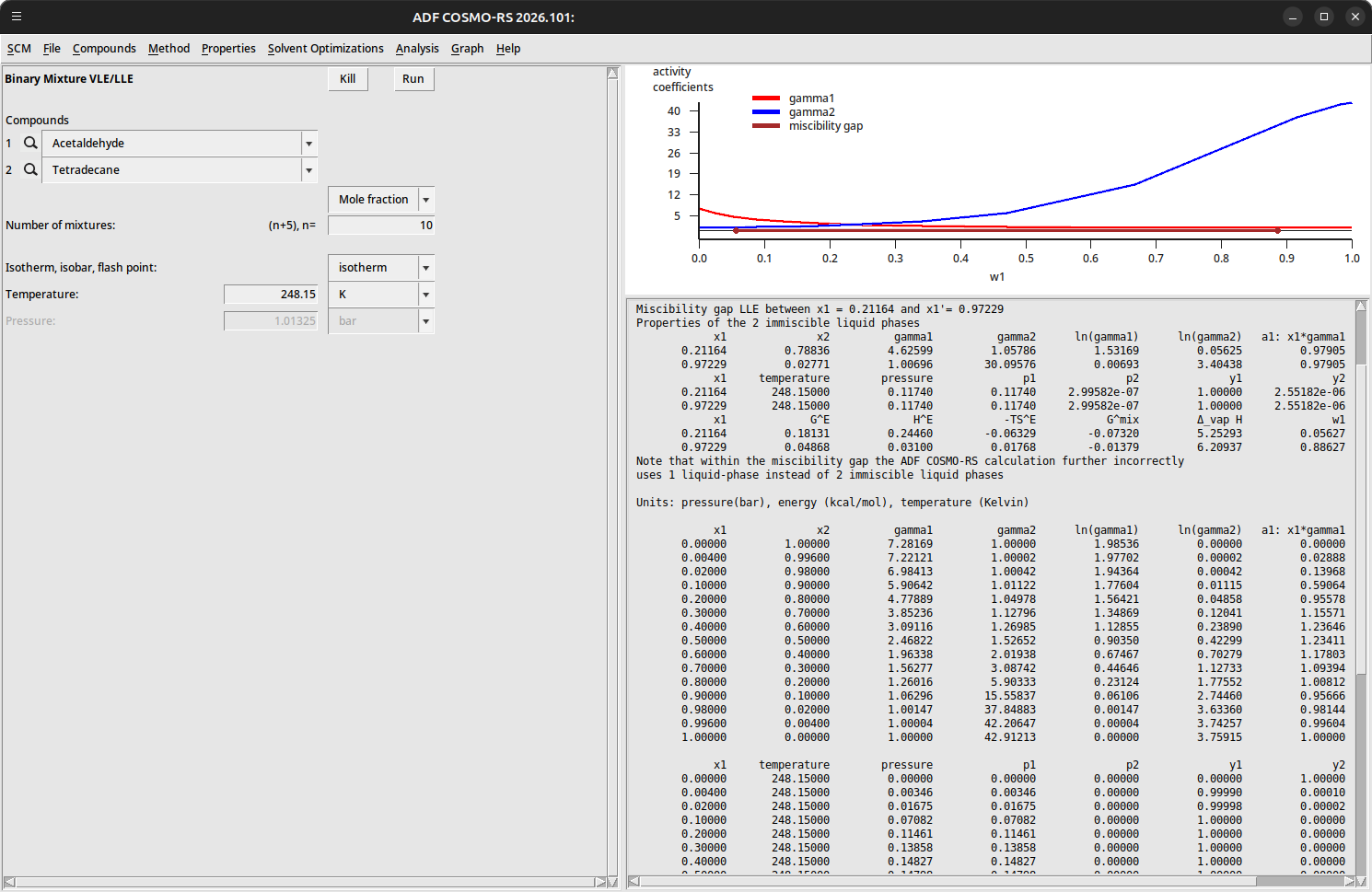
Fig. 71 Liquid-liquid equilibrium for acetaldehyde/tetradecane at 248.15 K
Note
For systems without a miscibility gap (e.g. MPD/tetradecane) or systems where the 50wt% falls outside the miscibility gap (e.g. acetaldehyde/cyclohexane), thermomorphic separation will not be possible at the given conditions. Modification of the solvent mixture or operating temperature would need to be considered in order to extend thermomorphic viability in such cases.
Next, we verify that the system forms a homogeneous mixture at the reaction temperature.[1]
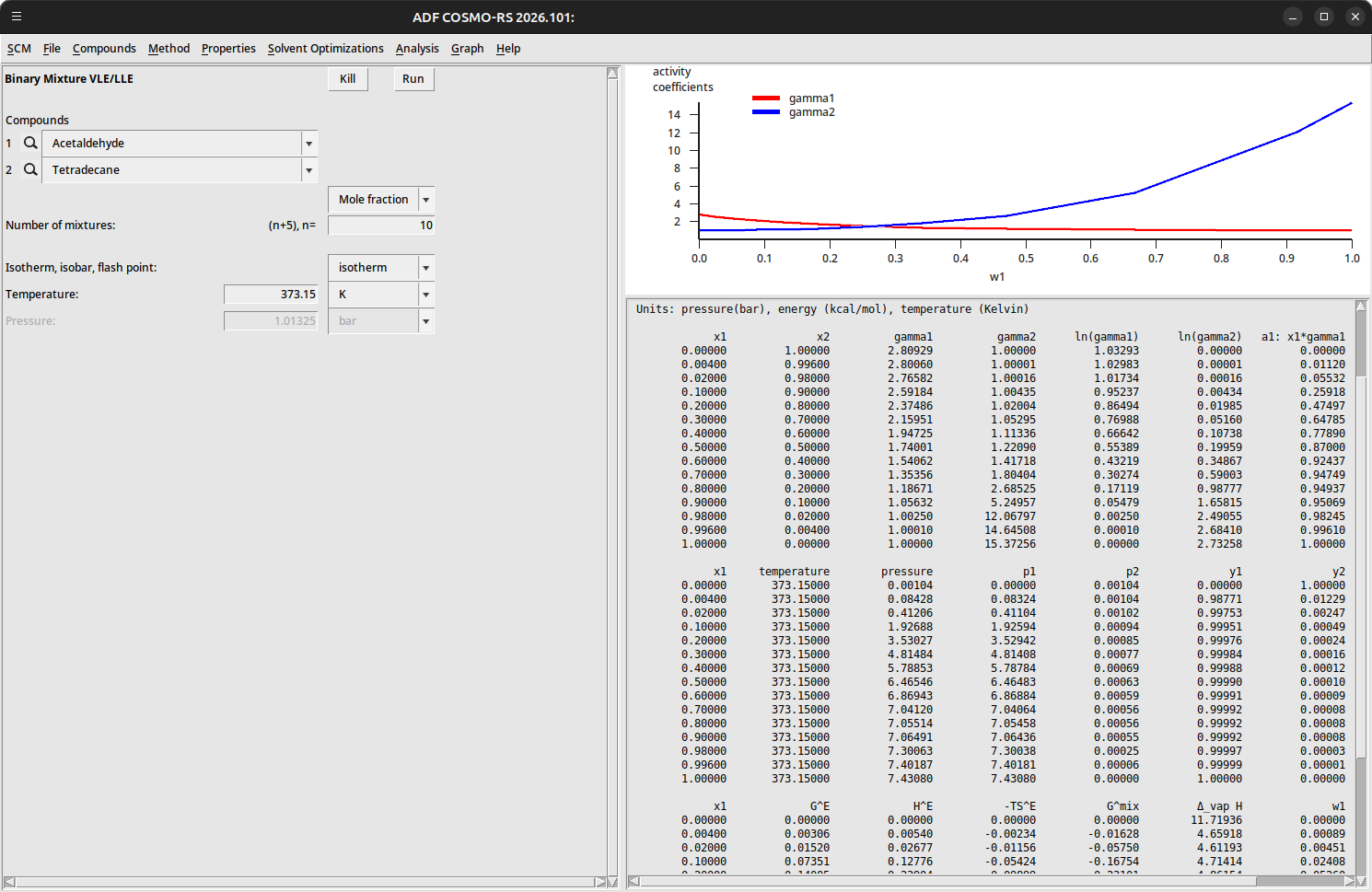
Fig. 72 Liquid-liquid equilibrium of acetaldehyde/tetradecane at 373.15 K
The graph no longer shows a miscibility gap at the elevated temperature. A phase transition will therefore occur in this mixture as the produce stream is cooled down.
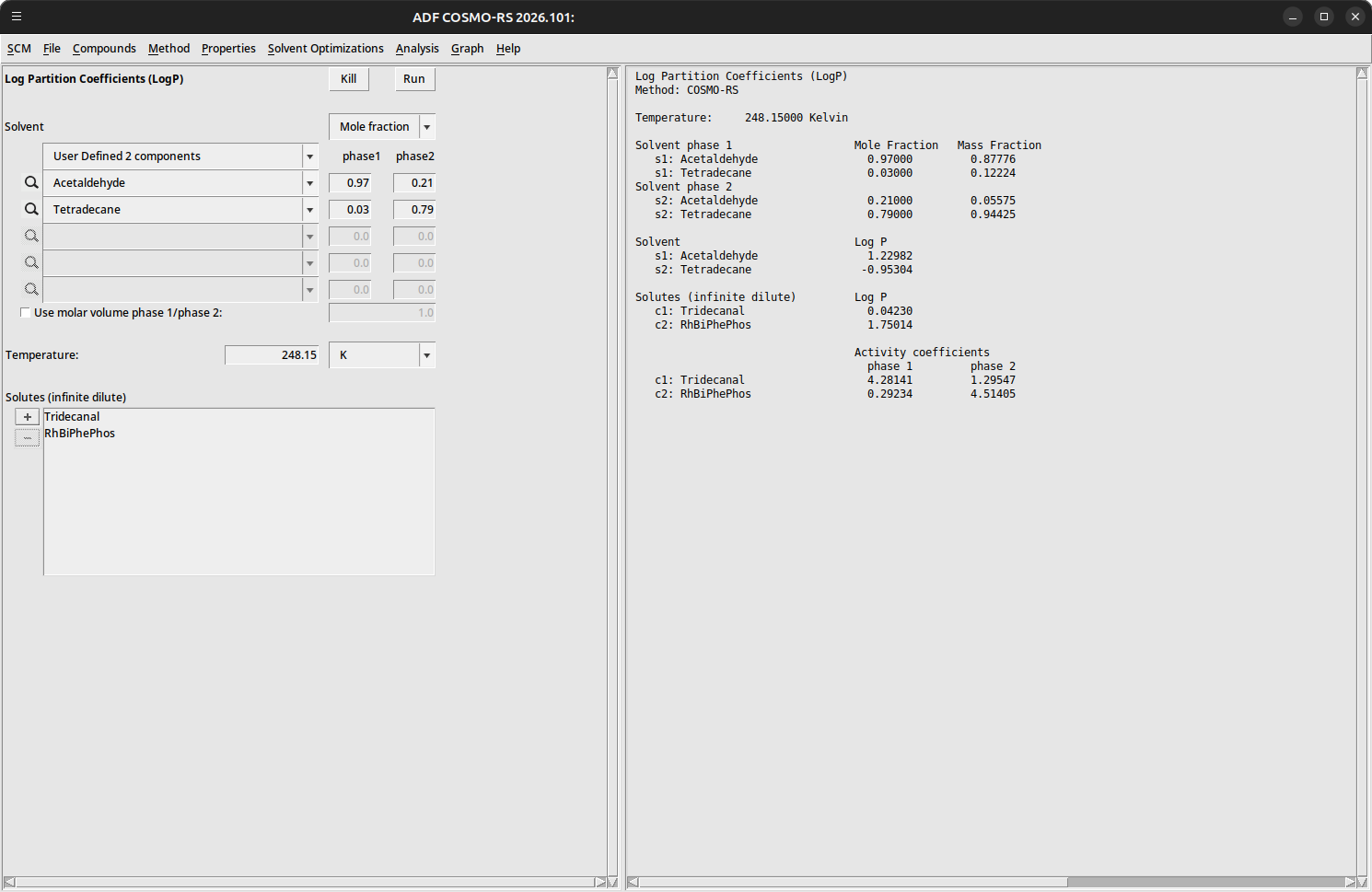
Now that a viable thermomorph has been found, we can proceed to look at the separation efficiency. We can calculate the partition coefficients to determine the selectivity for isolating the catalyst and product in each of the separated thermomorph phases. The compositions of these phases are reported in the LLE output table.
Acetaldehyde as the first componentTetradecane as the second component button to select RhBiPhePhos and tridecanal as solutes
The logarithm of the partition coefficients for RhBiPhePhos and tridecanal is reported in the output panel. A higher value is reported for RhBiPhePhos, indicating an affinity for the first phase, containing predominantly the polar solvent. The low value for tridecanal indicates a high affinity for the second phase, containing a dominant fraction of non-polar solvent.
The workflow described above can now be repeated for each of the solvent mixtures to find viable thermomorph candidates and compare their separation efficiency.
Tip
Due to the large number of possible solvent blends, it is recommended to use the PLAMS scripting interface to automate the screening.
Analysis
The figure below gives an overview of the solvent blends that form thermomorphic systems at the provided process conditions for the hydroformylation reaction.
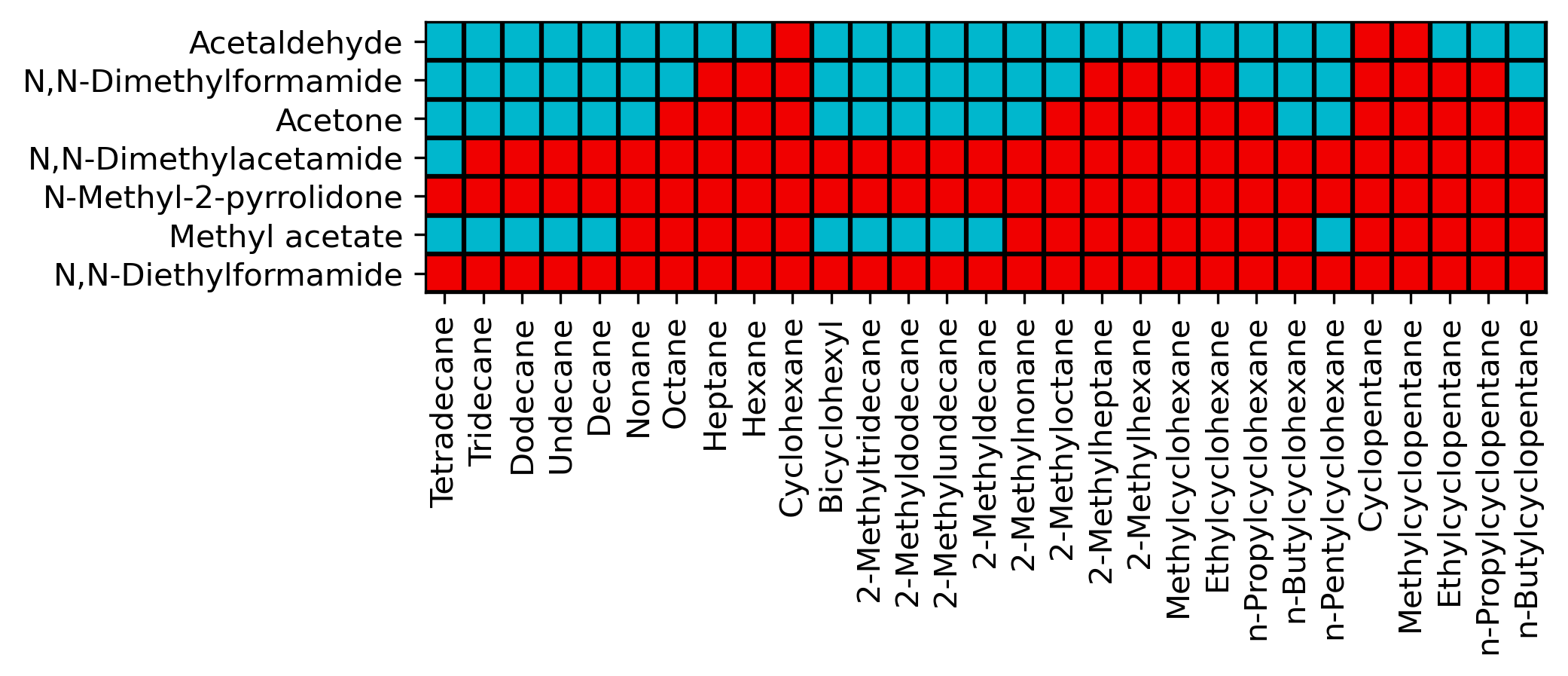
Fig. 73 Thermomorphic solvents for 1-dodecane hydroformylation identified by screening with COSMO-RS. Blue indicates systems that form thermomorphic solutions, red indicates systems that do not.
Thermomorphic separation appears to occur most readily for solvents with strong polarity differences. Many of the systems considered did not exhibit a thermomorphic transition within the specified operating regime, highlighting the need for large screenings to find suitable solvents.
The partition coefficients of the thermomorphic solvents can be used to rank the candidates. The catalyst partition coefficient will be considered as the leading metric, considering the high cost associated with replacing the leached metal. The top 10 solvents are shown in the table below.
Rank |
Polar solvent |
Non-polar solvent |
\(x_1\) |
\(x_2\) |
Log P (Tridecanal) |
Log P (RhBiPhePhos) |
|---|---|---|---|---|---|---|
1 |
DMF |
Tetradecane |
0.92 |
0.16 |
0.14889 |
1.75771 |
2 |
Acetaldehyde |
Tetradecane |
0.97 |
0.21 |
0.03634 |
1.75063 |
3 |
DMF |
2-Methyltridecane |
0.91 |
0.18 |
0.12483 |
1.66292 |
4 |
DMF |
Tridecane |
0.90 |
0.17 |
0.11039 |
1.64394 |
5 |
Acetaldehyde |
2-Methyltridecane |
0.96 |
0.23 |
0.02204 |
1.64016 |
6 |
Acetaldehyde |
Tridecane |
0.96 |
0.22 |
0.01417 |
1.61796 |
7 |
DMF |
2-Methyldodecane |
0.87 |
0.18 |
0.10855 |
1.55005 |
8 |
Acetaldehyde |
2-Methyldodecane |
0.95 |
0.23 |
0.00552 |
1.53958 |
9 |
Acetone |
Tetradecane |
0.93 |
0.25 |
0.12142 |
1.51270 |
10 |
DMF |
Dodecane |
0.86 |
0.18 |
0.09332 |
1.50440 |
The rank 10 solvent corresponds to the experimental reference system.[1] 9 additional solvents exhibiting superior catalyst recovery were obtained through the COSMO-RS screening. These systems employ longer-chain hydrocarbons as the non-polar solvent component, enhancing the purity of the thermomorphic phases. By reducing the non-polar component inside the catalyst-rich phase, a reduction in leaching can be achieved. This result has also been verified experimentally.[2]
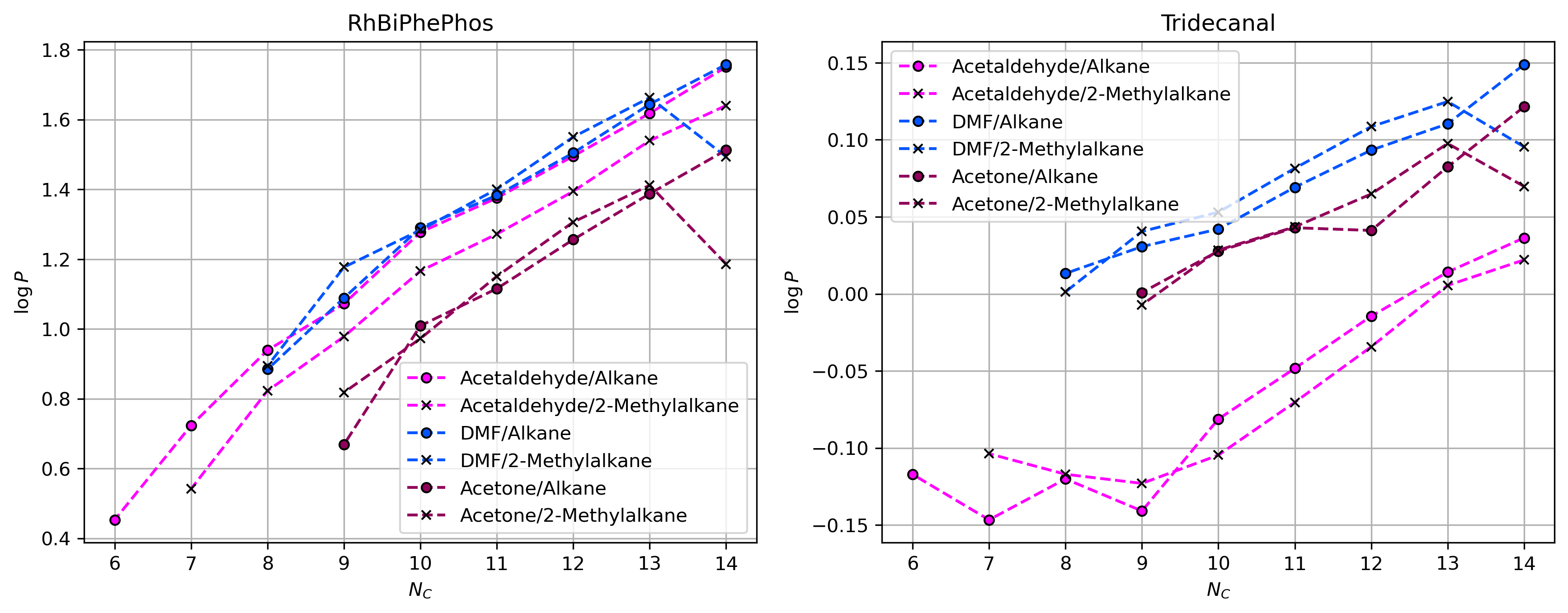
Fig. 74 Partition coefficients for non-polar thermomorph components with varying chain length
While the top-ranked solvent system (DMF/tetradecane) has the highest partition coefficient for the catalyst, the selectivity for tridecanal extraction is quite poor. The second-ranked solvent system (acetaldehyde/tetradecane) will in practice provide a more suitable choice of thermomorph.
This balance in product and catalyst recovery always needs to be considered. While ranking metrics can be devised to include both contributions, these metrics always require some arbitrary prioritization to be defined, which will be highly dependent on the context of the optimization problem.
Optimizing Separation Conditions
Cryogenic separation of the product stream is undesirable due to the high costs associated with cooling. We can increase the separation temperature in order to investigate the effect on catalyst and product partitioning. Repeating the screening process at higher separation temperatures sees a decline in the number of viable thermomorphic solvents, as the operating temperature starts to exceed the phase separation temperature for many of the solvents. The acetaldehyde/tetradecane system continues to exhibit the highest catalyst partition coefficient (considering temperatures up to 303 K).
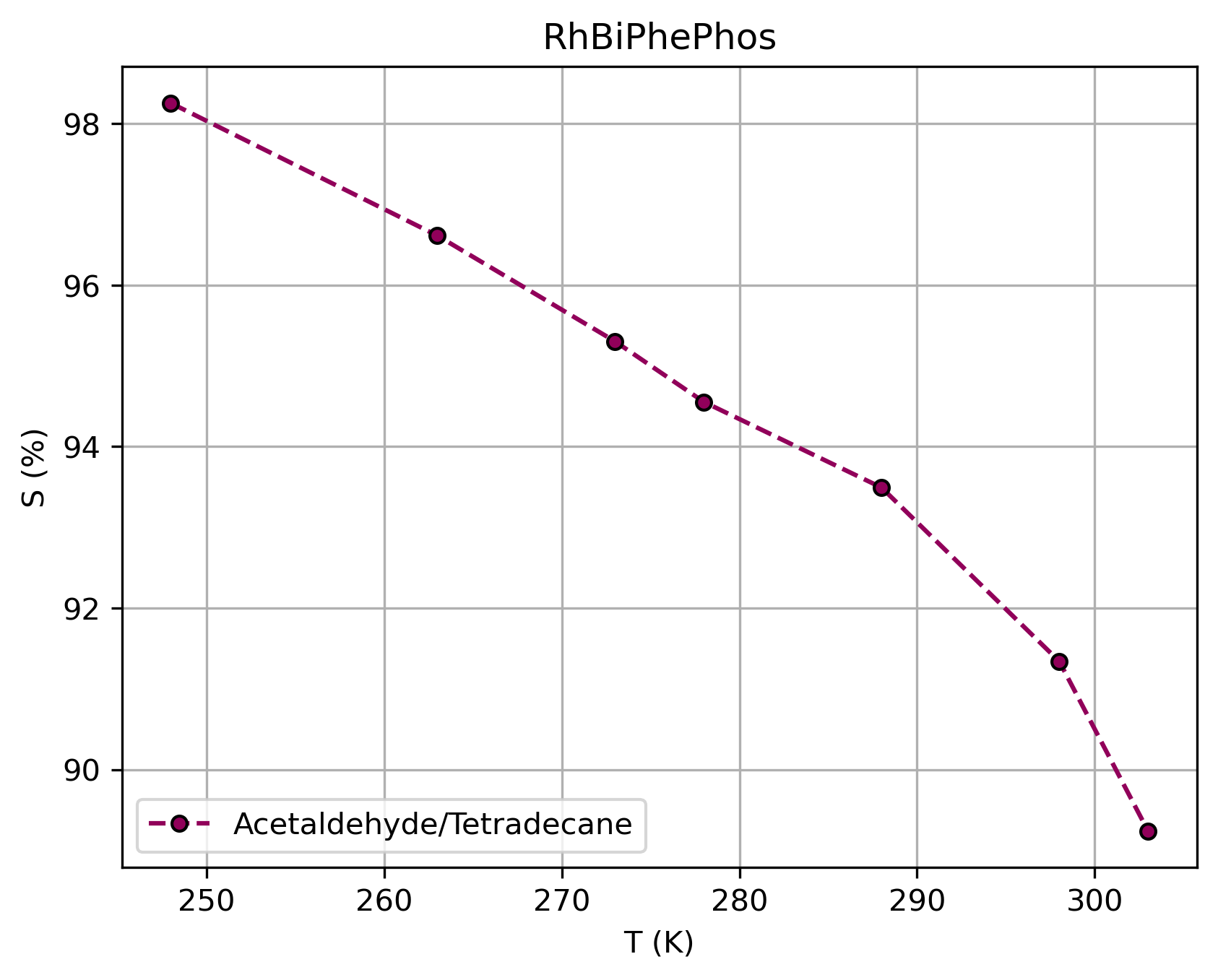
Fig. 75 Selectivity for catalyst recovery in acetaldehyde/tetradecane solvent at different separation temperatures
As the temperature is increased, the maximum catalyst recovery percentage (\(S = \frac{P}{1+P}\)) decreases. This follows as:
Solubility in the non-polar solvent increases, reducing separation efficiency
The polar solvent fraction of the secondary phase increases, resulting in enhanced leaching
Catalyst recovery at non-cryogenic conditions remains poor for the designated solvents. The temperature-dependent selectivity data may therefore be used instead to determine the optimal separation temperature, balancing the costs of heat exchange against catalyst loss as a part of larger process design or optimization work.